

Devil Wears Prada 2, billionaires and the death of a dream
The dream that The Devil Wears Prada presented us in 2006 is dead. Forget about choosing the job that aligns with your values. In 2026, we’re lucky to have jobs at all.
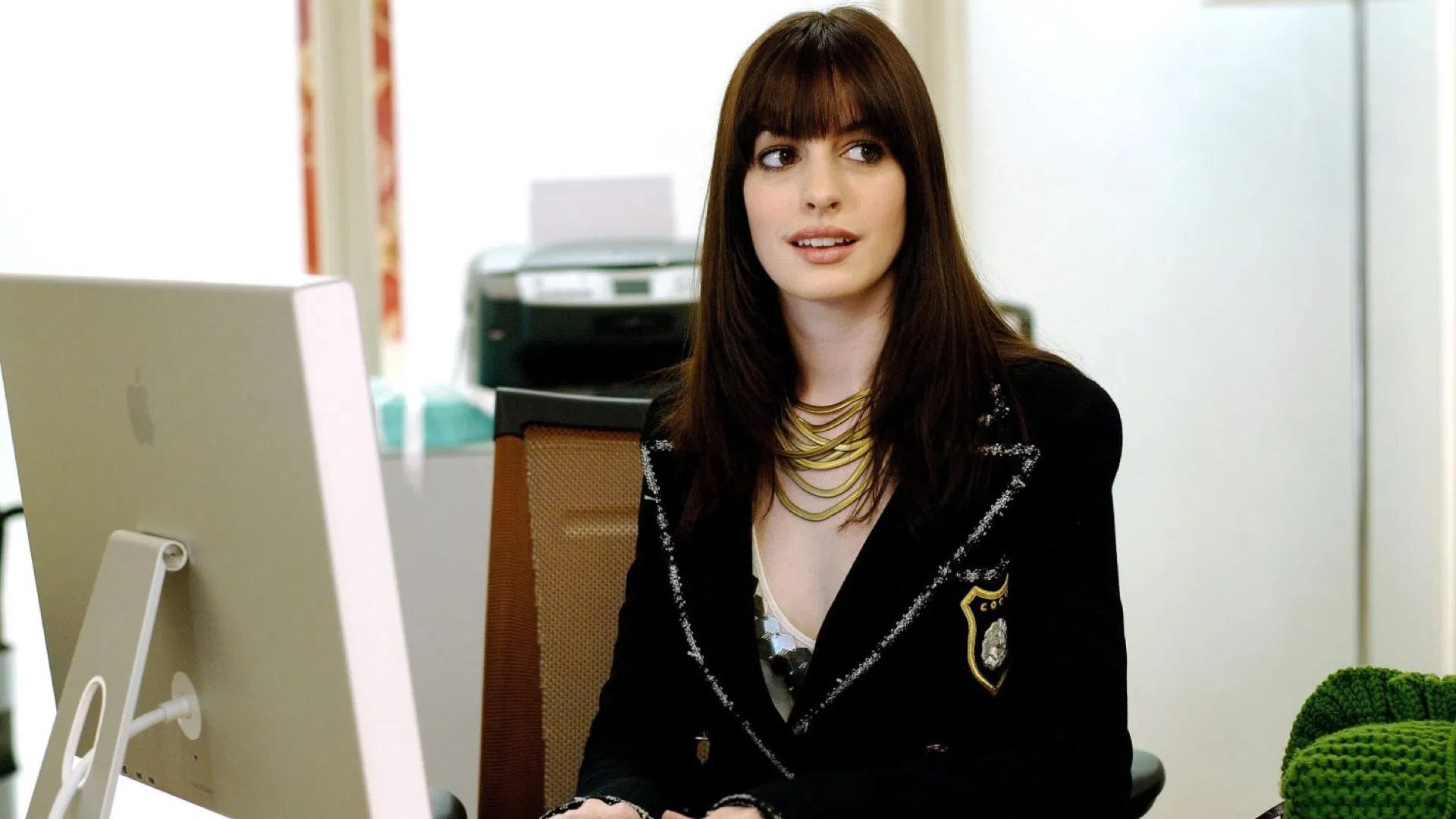
I admit, I had no plans to watch The Devil Wears Prada 2. The original had a perfectly satisfying ending and I’m over reboots and sequels. Quite frankly, I’m over this contrived nostalgia that Hollywood keeps mining us for.
But then reviews started pouring in. The film got surprisingly positive feedback from journalists who proclaimed it a searingly accurate depiction of what it’s like to work in the modern media industry, and friends and former colleagues who I used to work with in mainstream media praised the film as resonant and validating. My curiosity was piqued, and last night I finally got around to watching it.
The Devil Wears Prada 2 — set twenty years after the original — opens with Andy Sachs, now a successful reporter, seated at a table of colleagues at a media awards gala, awaiting the announcement of who will take home a prestigious investigative journalism prize that she’s been nominated for. Seconds before her name is called out as the winner, Andy and the rest of her newsroom get text alerts notifying them that they’ve all been made redundant. Such is the precarity of journalism: you can win an award one moment, and have no job the next. It’s not a meritocracy, revenue will always take precedence over quality and values, and no matter how hard you work, you will never have job security.
This sets the tone of what is to come: a bleak look at the decimated industry that is journalism, and how it’s no longer possible to work this industry without sacrificing either your salary or politics. In 2006, The Devil Wears Prada tells us that if you have to choose, choose the latter. In 2026, it backtracks.
If The Devil Wears Prada is about not letting pretty things seduce you away from more honest work, then The Devil Wears Prada 2 suggests that this is a doomed task and you should prepare for the inevitable.
Devastated by the loss of her job, and anxious about how she will maintain her lifestyle now that she doesn’t have an income, Andy is surprised to get a call from Irv Ravitz, the owner of Runway’s parent company Elias-Clark, offering her the features editor position. The magazine is in trouble after publishing a puff piece about a brand that uses sweatshop labour, and he thinks Andy — being an award-winning journalist — can restore its public image.
Andy is soon reunited with Nigel and a rather listless Miranda who isn’t the impervious woman she once was thanks to HR complaints and changing values. Runway’s content is now digital, clickbaity, algo-driven slop designed to maximise revenue and appease brand sponsors rather than push the boundaries of fashion journalism. Andy goes in with big dreams of bringing journalism back to the mag, but is disappointed to find that the thoughtful editorial direction she’s taking isn’t generating clicks and views. To keep her job and also bring some relevance back to Runway, she secures an interview with the elusive, intelligent and graceful Sasha Barnes, ex-wife of Silicon Valley billionaire Benji Barnes and now richest woman in the world. It’s a hit.
The dream that The Devil Wears Prada presented us in 2006 is dead. Forget about choosing the job that aligns with your values. In 2026, we’re lucky to have jobs at all.
Fast forward and Andy has settled into her role at Runway. She’s accepted that she will have to publish puff pieces and consumerist listicles to keep the rest of her more meaningful pieces afloat. But then, a new threat: Irv Ravitz dies, and Runway is facing a restructure. In yet another desperate attempt to save her job (as well as Miranda’s), Andy reaches out to Emily who is now dating billionaire Benji Barnes, and the two scheme to get him to buy the mag from the Ravitz family. But it turns out Benji is an AI accelerationist who has no appreciation of the arts and Emily plans to install herself as the new editor-in-chief. So, Andy instead turns to Miranda, and the two convince Sasha — she’s the rich ex-wife, remember? — to outbid Benji and buy not just Runway, but it’s parent company too. Day saved!
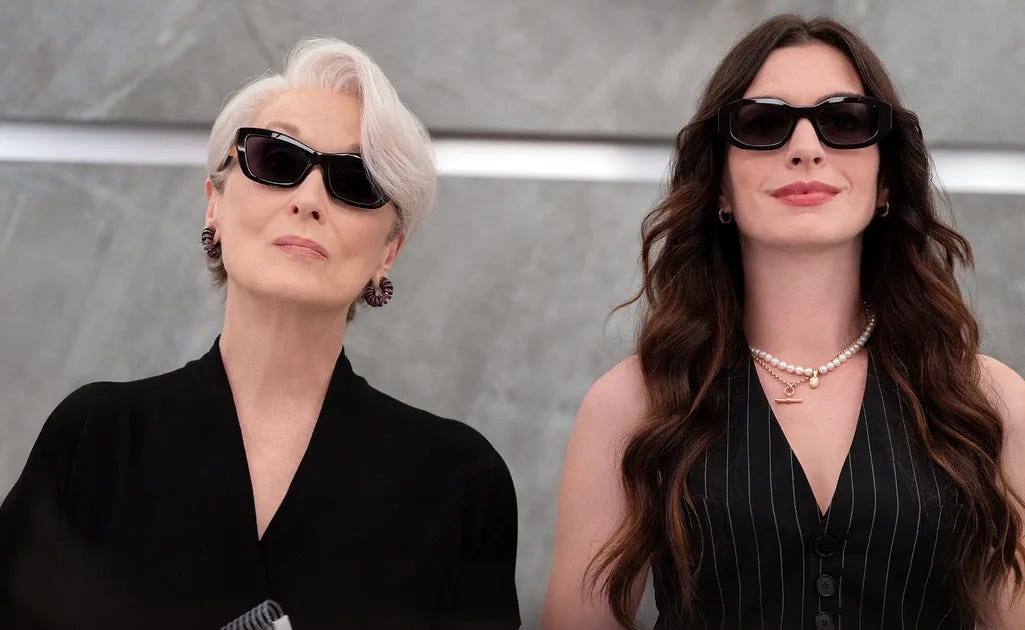
RIP chasing your dreams
If The Devil Wears Prada is about not letting pretty things seduce you away from more honest work, then The Devil Wears Prada 2 suggests that this is a doomed task and you should prepare for the inevitable. Get your bag, queen, because the world is fucked!
This is no clearer than in the juxtaposition of the two films’ endings, which shows just how far we’ve fallen in only 20 years.
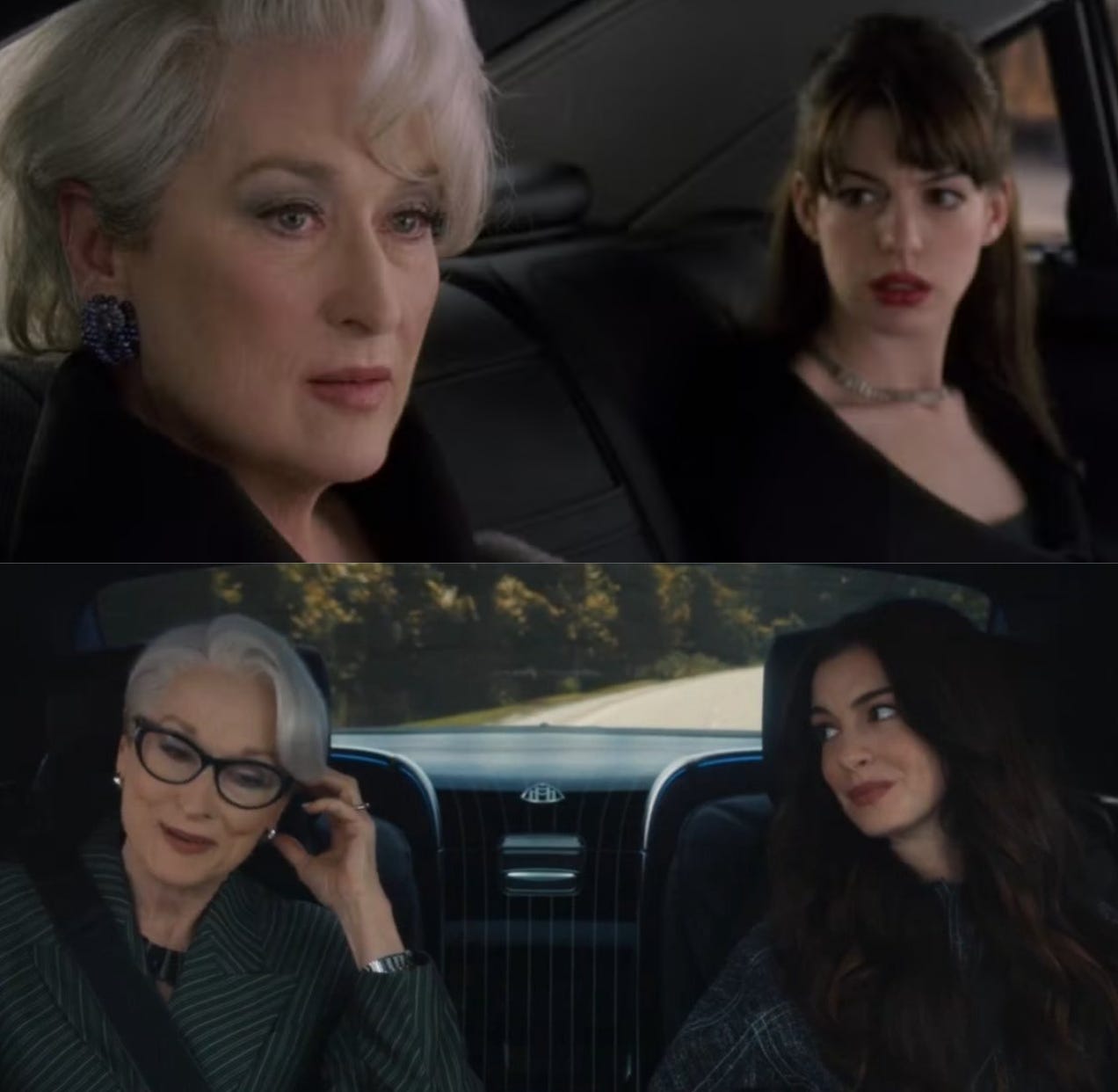
In The Devil Wears Prada, the pivotal moment for Andy is a conversation she has with Miranda after the latter betrayed Nigel to save her own skin.
While Andy quietly mourns Nigel’s ambitions, Miranda pays her a rare compliment: “I see a great deal of myself in you.”
A few weeks earlier, this comment would have meant the world to Andy. Now, it feels like a slap in the face. She insists she would never betray Nigel the way Miranda did, but Miranda points out that Andy already chose Paris Fashion Week over Emily. She tells Andy that, “You chose to get ahead. You want this life, those choices are necessary.”
And then, the following exchange:
“What if I don’t want to live the way you live?”
“Don’t be ridiculous, Andrea. Everybody wants this. Everybody wants to be us.”
— Miranda Priestly and Andy Sachs in The Devil Wears Prada (2006).
It’s in this moment that Andy realises she would rather remain true to her values than keep on this path to power, even if that means giving up the high life. The indomitable Miranda is no longer aspirational, but a cautionary tale of the empty and cold person you can become in pursuit of greatness. The sacrifices are not worth it.
In The Devil Wears Prada 2, a parallel unfolds: Miranda and Andy again in the backseat of a car after they snatched Runway back from Emily. But this time, the camera places them alongside each other, both in the foreground. Equals. When Miranda pokes holes in Andy’s sense of selflessness by suggesting she saved Runway for herself as much as she did for Miranda, Andy doesn’t balk. She smiles, shrugs, admits it. Yes, she did what she had to in order to keep her job and apartment. What more can a girl ask for? What more could she want?
The dream that The Devil Wears Prada presented us in 2006 is dead. Forget about choosing the job that aligns with your values. In 2026, we’re lucky to have jobs at all.
Andy is a testament to this — she tried to do the whole meaningful and important journalism thing, and it failed her. Glamour is aspirational once again. You can have your cake and eat it too. You deserve it.
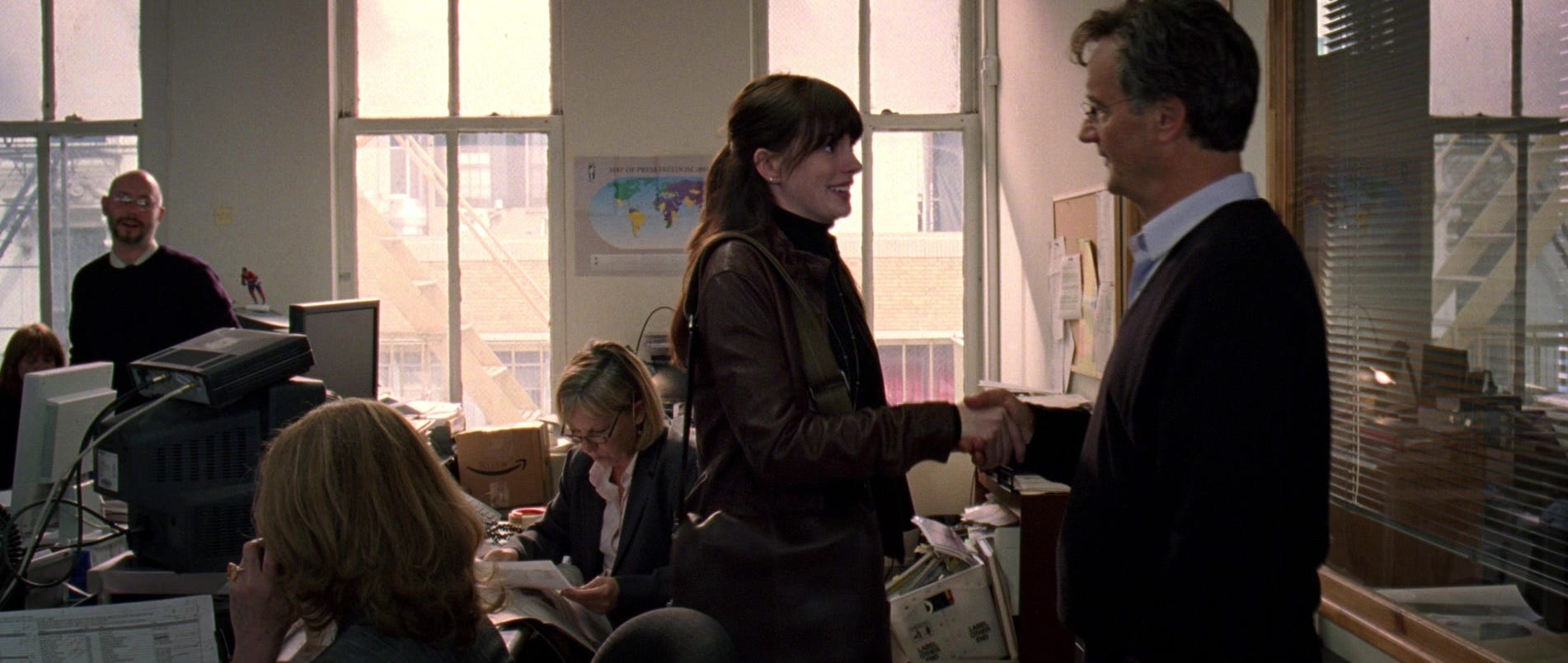
Even visually, the difference between the hopeful potential of Andy in the first film and her resignedness in the second is stark. In 2006, after leaving Runway, Andy interviews for a job at the New York Mirror. The office is shabby and on the lower floors, but it’s bathed in warm sunlight and filled with the comforting buzz of conversation. Journalists bustle about and the editor interviews Andy in the midst of it all — no fancy private office here. Just hard workers working on stories that matter.
In The Devil Wears Prada 2, Andy triumphantly keeps her position at Runway and moves to a bigger office next to Nigel and Miranda. She’s officially one of them, and this is supposed to be a good thing. Her new office is lit up with fluorescent office lights, not the warm glow of sunlight, because — as the camera zooms out and reveals — she is working at night time, alone in her ivory tower high-rise office with beautiful views of New York City.
Is Andy working her dream job? No. Did she return to her values and go back to news journalism in a full-circle moment? Also no. Does she have a good work-life balance, at least? Oh please.
The Devil Wears Prada says: “Choose yourself, and the right job will come.”
The Devil Wears Prada 2 says: “Choose the job, or you won’t have a self.”
Andy is working a job that she moderately likes and which pays her bills, and in the year of 2026, that is as good as it gets.
We can save journalism. We just need a good billionaire.
There’s a lot A Devil Wears Prada 2 gets right in its depiction of working in lifestyle media. Yes, it can be glamorous: you are gifted freebies, attend fancy luncheons, go to galas and brand activations. But in return you have to write articles you don’t care about to appease brands that use sweatshop labour, forever chemicals and unethically produced materials to convince people to buy products they don’t need. Your priority is no longer journalism, but brand-safe ad content that looks like journalism. Your best work will never get the kind of views a listicle on enzyme peels will. Clickbait and chasing numbers becomes your whole job, and one lukewarm criticism of the wrong product can get you blacklisted.
The film hints at this double-edged sword but ultimately still glamorises fashion journalism and brand relationships because it relies on them for access. It can’t commit to its criticism because it’s still a product of the industry it wants to scrutinise.
But perhaps the most interesting part of A Devil Wears Prada 2’s updated view on the media industry is its take on billionaires owning it.
The main complication of the film is that one billionaire dies, and his heir wants to kill Runway. The solution is getting a third billionaire to step in and keep the legacy alive, but then he wants to replace writers with AI, so a fourth billionaire is brought in to fight him.
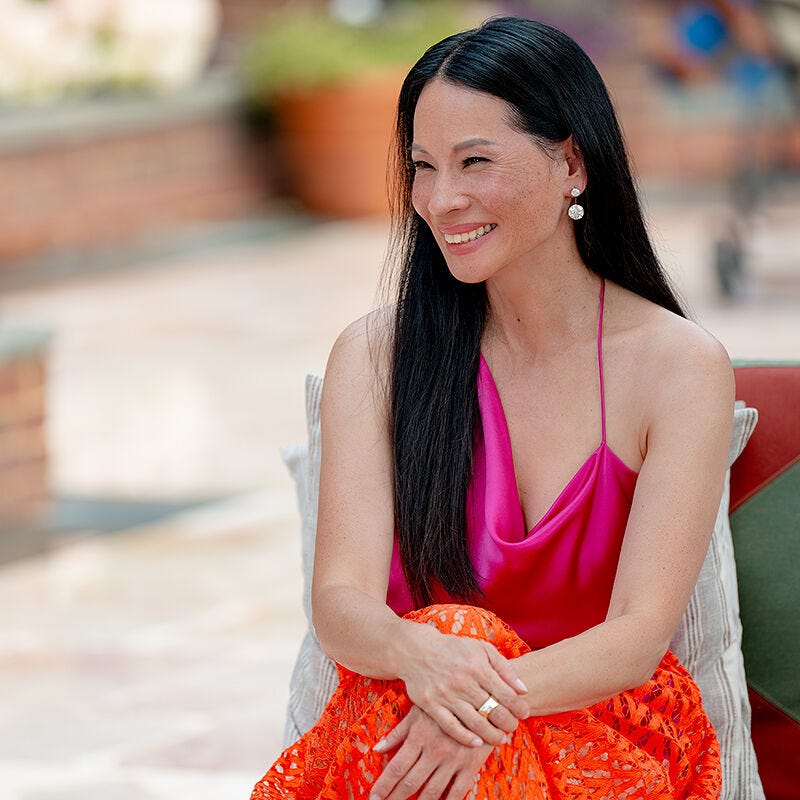
Sasha, played by Lucy Liu, is intelligent, graceful and not interested in the spotlight. She praises the more serious pieces Andy has been publishing at Runway, an indication that she’s a woman of taste and intellect. She’s also a woman of colour who inherited her wealth from her husband, no doubt to improve her optics to us as viewers and drive home the sense that she’s not part of the white man establishment.
The Devil Wears Prada 2 goes to great lengths to make her seem like one of us, a good billionaire, so that when she’s brought in as the buyer of Runway, we’re supposed relieved — even happy — about it.
But I wasn’t.
This resolution, to me, felt bleak because it doesn’t actually the challenge or even resist the power structures in the media industry. Miranda is still exploitative and her worldview persists. The film critiques issues that can be applied broadly to media as a whole, but Sasha stepping in doesn’t actually change anything for anyone outside of Runway. And even then, it’s acknowledged by Miranda and Andy that this fix is temporary, that there’s no guarantee Sasha doesn’t have her own plans to influence Runway’s editorial direction. Ultimately, everyone is still at the whim of a billionaire — just an ethnic, feminist one.
What a tragic indictment of where we are as a society, where just twenty years ago feels like a better time, and where even in fiction we can’t envision a better world.
If The Devil Wears Prada 2 was true to Andy’s values in the first film, it could have focused on indie media and the creator economy — which is increasingly what good, award-winning journalists are resorting to to tell their stories. But, instead, we are presented with a shallow narrative in which a woman plays by the rules to maintain her station and the status quo.
Mark Fisher famously wrote that it is easier to envision the end of the world than the end of capitalism. I think it’s also true that it’s easier to fantasise about billionaires saving us than it is to consider what saving ourselves looks like.
Instead, we settle for a film in which the inspirational happy ending was that a woman gets a billionaire to save a job she doesn’t even necessarily love or resonate with, so that she can afford a nice apartment and perhaps unfreeze her eggs.
It’s fucking bleak.
This might sound insane but have you seen the Christina Aguilera / Cher movie? I felt the same pit in my stomach watching that and seeing how the resolution is 'we can invent a thing to sell to this rich asshole so the other rich asshole doesn't win!' Like, the film is great camp fun but also we live in a society and should have stayed in the oceans.
I almost cried reading this