

A feminist reading of Frankenstein
Womanhood as monstrously misunderstood
When I walked out of the theatre after watching Guillermo Del Toro’s Frankenstein (2025), I felt conflicted.
This was a film I was hyped to see because the talent mix looked really promising. Del Toro, Oscar Isaac, Mia Goth and Jacob Elordi? A lethal combo, and one that could probably do Mary Shelley’s feminist musings justice. However, its contrived ending felt unearned and a little misplaced — enough that it undid the rest of the film for me.
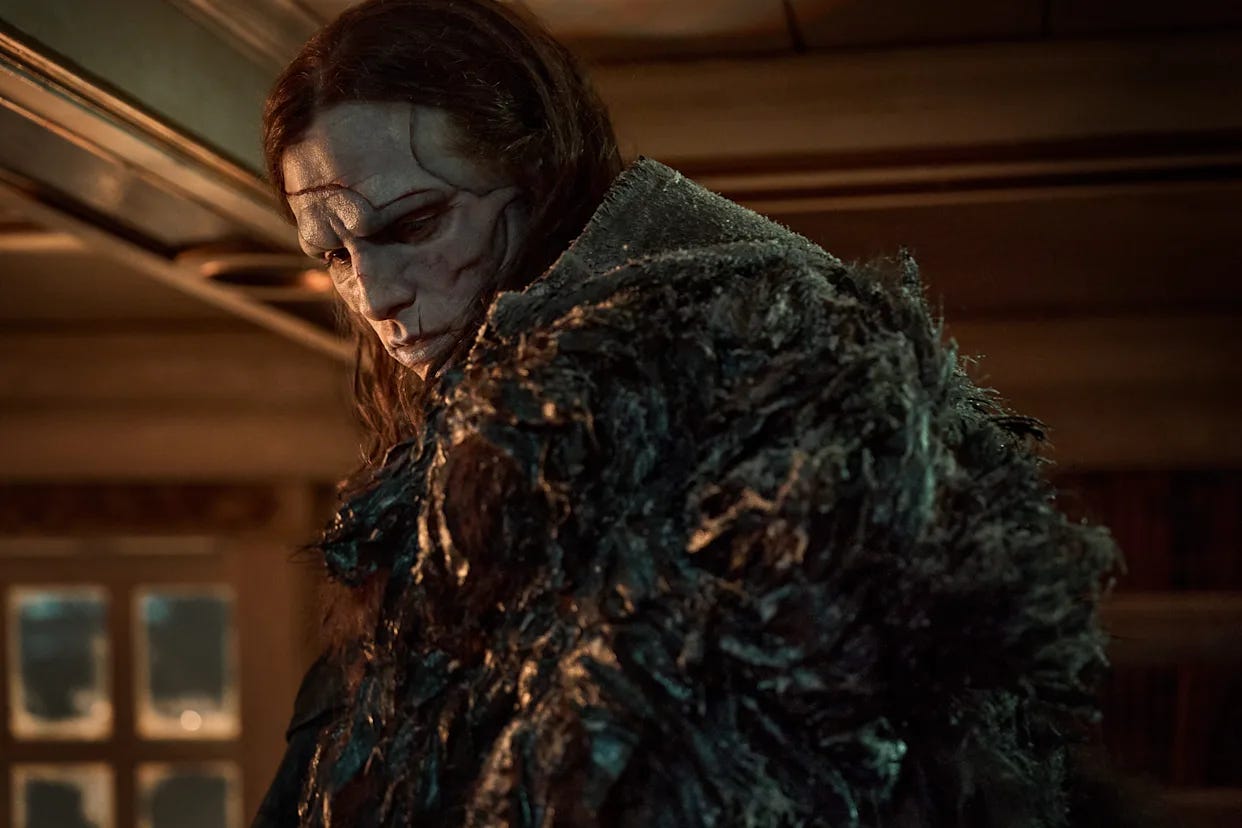
Unlike other Frankenstein; or The Modern Prometheus (FoTMP) adaptations, Frankenstein (2025) isn’t too interested in the morality of “playing God”. Instead, it’s a daddy issues movie (affectionate), honing in on cycles of violence and the inevitability of violence as a part of nature — can humans ever really be above it?
In the film, Victor is close to his mother but alienated from his father, who he resents and also competes with for his mother’s attention. It’s all very Oedipal, to the point where Mia Goth plays both Victor’s mother and, later, his love interest Elizabeth.
Del Toro meditates on the ramifications of parental neglect and abuse, making changes to the original story so that Victor’s mother dies in childbirth while delivering his younger, fairer, more favoured brother William. It’s implied that Victor’s father, a talented surgeon, could have saved her but chose not to (whether it was apathy, or medical misogyny, or both is unclear). Victor, driven by grief and rage, vows to defeat his father by defeating death itself.
The differences between Victor and his younger brother William are stark, not just in looks (the actors are literally of different races) but in upbringing, and therefore disposition. Where Victor is neglected and becomes sullen, obsessive and angry, William is doted on, resulting in a child who is sweet, cheerful and naive.
And so, the groundwork for Victor and the creature’s relationship is set.
The creature, so sublime in its moment of creation, ultimately becomes a disappointment to Victor when he realises the only word it knows is his name. He believes he failed to make the creature smart — that he failed in giving it the correct nature — when in reality, he fails to nurture its intelligence. In his disgust, rage and disappointment, Victor becomes exactly like his father: cruel and mocking. The cycle of violence continues.
Eventually, the creature — who has a sweeter nature than his book counterpart — escapes and tries to live a normal life which, as we know, is impossible. He’s doomed from the start, and once Victor gets wind of the fact that his creation is still alive, he sets out on a self-destructive mission to destroy it once and for all.
The end of the film (spoiler alert?) results in a violent confrontation in which the two almost kill each other. However, it only takes moments for Victor to switch up and urge the creature to forgive him… which the creature does. The moment is rushed, contrived and feels wholly unearned — in part because it doesn’t adequately reckon with the Mary Shelley of it all.
Frankenstein’s creature as a stand-in for womanhood
The creature in Frankenstein; or The Modern Prometheus is most commonly depicted as a result of Victor Frankenstein’s hubris, a demon manifested by disrespecting the natural (Christian) order.
However, my reading de-centres Victor’s original sin and instead understands the creature as a stand-in for Mary — and women more broadly — as the original Other: misunderstood and deemed inferior because of elements outside of their control.
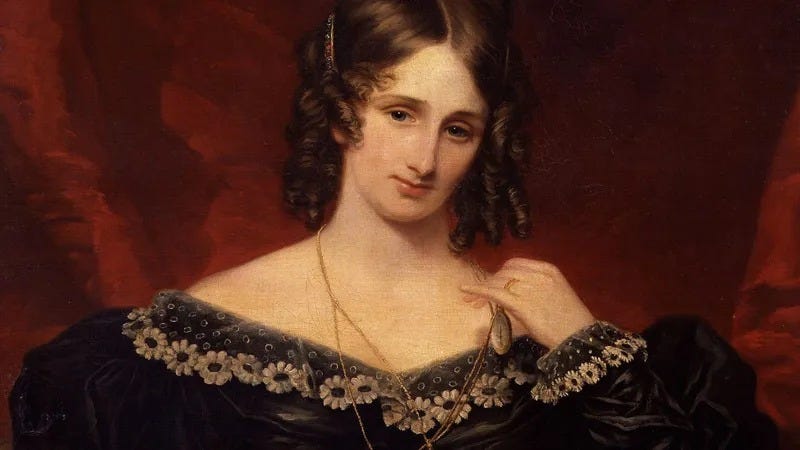
Mary Shelley’s mother, who died 11 days after she was born, was Mary Wollstonecraft — widely considered to be one of the founding feminist philosophers, and also the author of A Vindication of the Rights of Woman (1792) which argued that women weren’t naturally inferior to men, but only appeared to be because they didn’t get the same education.
Crucially, she argued that the perceived submissiveness of women is not a matter of science but culture, or rather, not a matter of nature but nurture — a theme that is woven into the 2025 adaptation when Victor is angered that the creature isn’t born with knowledge. It is deemed inferior because of a lack of education.